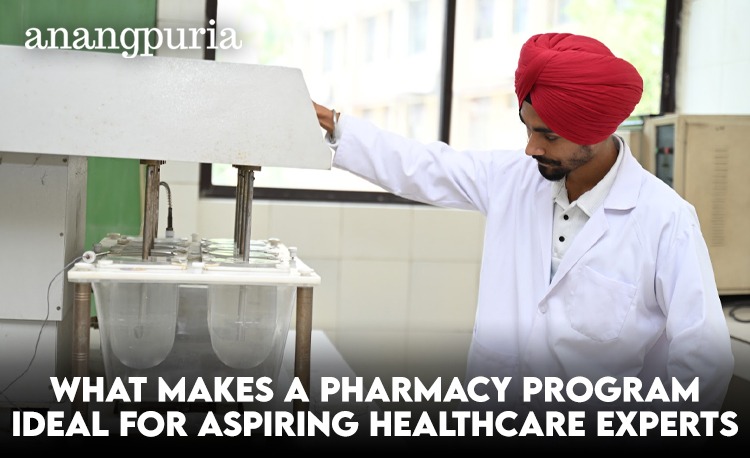
What Makes a Pharmacy Program Ideal for Aspiring Healthcare Experts
Key Highlights
- Understand the essential factors that define a career-focused pharmacy program.
- Explore how practical training, research exposure, and industry learning shape future healthcare professionals.
- Learn why choosing the right institution matters for students pursuing pharmacy careers.
- Discover important aspects to evaluate while selecting among the Top 10 B Pharma College.
- Know how modern pharmacy education prepares students for opportunities in healthcare and pharmaceutical industries.
Table of Contents
- Introduction
- About Us
- What Features Make a Pharmacy Program Ideal for Students?
- How Does Practical Training Enhance Pharmacy Education?
- Why Are Research Opportunities Important in Pharmacy Programs?
- How Does Industry Exposure Prepare Future Healthcare Experts?
- Conclusion
- FAQs
Introduction:
The healthcare sector is continuously evolving with advancements in medicine, technology, and pharmaceutical research. At AnangPuria, the Top 10 B Pharma College in Faridabad where the demand for skilled healthcare professionals increases, pharmacy education has become more focused on developing professionals who can contribute effectively to patient care, drug development, and healthcare innovation. A well-designed pharmacy program should not only provide theoretical knowledge but also build practical expertise, research abilities, and professional skills.
About Us:
AnangPuria focuses on providing pharmacy education that supports academic growth, practical learning, and professional development. The institution aims to create an environment where students can strengthen their understanding of pharmaceutical sciences while gaining exposure to modern healthcare practices.
What Features Make a Pharmacy Program Ideal for Students?
An ideal pharmacy program goes beyond teaching pharmaceutical concepts. It prepares students to understand medicines, healthcare systems, and the responsibilities associated with improving patient outcomes.
Essential Feature | Importance in Pharmacy Education |
Updated Curriculum | Keeps students aligned with healthcare advancements |
Laboratory Training | Develops practical pharmaceutical skills |
Experienced Faculty | Provides academic and industry guidance |
Research Opportunities | Encourages innovation and scientific thinking |
Industry Exposure | Builds professional understanding |
A strong pharmacy program should include:
- Comprehensive understanding of pharmaceutical sciences.
- Practical sessions to develop technical abilities.
- Exposure to current healthcare challenges.
- Opportunities for innovation and research.
- Development of communication and professional skills.
These elements help students become confident healthcare professionals capable of adapting to the changing pharmaceutical landscape.
How Does Practical Training Enhance Pharmacy Education?
Pharmacy is a field where practical knowledge plays a crucial role in understanding medicines, formulations, and healthcare applications. Laboratory-based learning allows students to experience pharmaceutical processes and develop essential technical expertise.
Practical training helps students:
- Understand drug formulation and testing procedures.
- Learn laboratory techniques and safety practices.
- Apply scientific concepts through experiments.
- Develop accuracy and attention to detail.
Hands-on experiences improve students’ confidence by allowing them to connect theoretical concepts with real pharmaceutical applications. Regular practical exposure prepares learners to handle professional responsibilities effectively after graduation.
Modern pharmacy education focuses on creating professionals who can contribute not only as medicine experts but also as researchers, healthcare advisors, and industry specialists.
Why Are Research Opportunities Important in Pharmacy Programs?
Research plays a significant role in pharmaceutical development and healthcare innovation. Students who gain research exposure develop the ability to analyse problems, explore solutions, and contribute to advancements in medicine.
Research-oriented learning helps students:
- Understand drug discovery and development processes.
- Explore emerging areas in pharmaceutical sciences.
- Improve analytical and scientific thinking.
- Develop innovative approaches toward healthcare challenges.
A quality pharmacy program encourages students to participate in research projects, academic activities, and scientific discussions. This exposure creates a foundation for students interested in careers related to pharmaceutical research, clinical studies, and advanced healthcare solutions.
How Does Industry Exposure Prepare Future Healthcare Experts?
The pharmaceutical industry requires professionals who understand both scientific concepts and workplace expectations. Industry exposure helps students gain insights into professional practices and career opportunities.
Important industry-oriented learning opportunities include:
- Internships with pharmaceutical organisations.
- Expert sessions by healthcare professionals.
- Workshops focused on current technologies.
- Exposure to pharmaceutical production and quality processes.
These experiences help students understand real-world applications of pharmacy knowledge. They also improve communication skills, teamwork abilities, and professional confidence.
A career-focused pharmacy program ensures that graduates are prepared to meet industry standards and contribute effectively to healthcare development.
Conclusion:
An ideal pharmacy program creates a balance between theoretical understanding, practical skills, research exposure, and professional development. As healthcare continues to advance, pharmacy graduates need strong scientific knowledge along with the ability to adapt to new technologies and industry requirements.
FAQs:
Q1. What should students look for in a pharmacy program?
Ans: AnangPuria provides a learning environment focused on scientific knowledge, practical training, and healthcare skills.
Q2. How does practical training benefit pharmacy students?
Ans: Laboratory exposure and application-based learning help students understand pharmaceutical concepts effectively.
Q3. Why is research exposure important in pharmacy education?
Ans: AnangPuria encourages scientific thinking and innovation to help students explore advancements in healthcare.
Q4. How does industry exposure support pharmacy careers?
Ans: Professional interactions and practical experiences prepare students for pharmaceutical industry requirements.
Q5. What skills help students become successful healthcare professionals?
Ans: AnangPuria focuses on technical knowledge, analytical abilities, communication, and professional confidence.
Q6. Why is choosing the right pharmacy program important?
Ans: AnangPuria helps students build a strong foundation for diverse career opportunities in healthcare.