The Role of Labs, Projects, and Practical Training in Engineering Success
Key Highlights
- Understand why practical learning is essential in engineering education.
- Explore how laboratories strengthen technical understanding.
- Learn the importance of projects in developing problem-solving skills.
- Discover how industrial training bridges the gap between academics and industry.
- Find out what students should look for when selecting an Engineering
- Understand how hands-on experiences improve employability and innovation.
Table of Contents
- Introduction
- About Us
- Why Are Engineering Labs Important for Student Success?
- How Do Academic Projects Build Real-World Skills?
- Why Does Practical Training Matter in Engineering Careers?
- How Do Industry Collaborations Improve Learning Outcomes?
- Labs, Projects, and Training: A Comparative Overview
- Key Components of an Industry-Oriented Engineering Education
- Conclusion
- FAQs
Introduction:
Engineering is a discipline built on innovation, experimentation, and practical application. While classroom lectures provide the theoretical foundation necessary to understand scientific and engineering concepts, true mastery comes from applying those concepts in real-world situations. At Anangpuria, the Top Engineering Colleges in Haryana where the industries become increasingly technology-driven, employers expect graduates to possess not only academic knowledge but also practical experience that demonstrates their ability to solve complex challenges.
About Us:
A forward-thinking engineering institution focuses on preparing students for future industry demands through a balanced blend of theoretical learning and practical exposure. By emphasizing laboratory work, industry-relevant projects, research initiatives, and professional training programs, students gain the skills required to excel in today’s competitive engineering landscape.
Why Are Engineering Labs Important for Student Success?
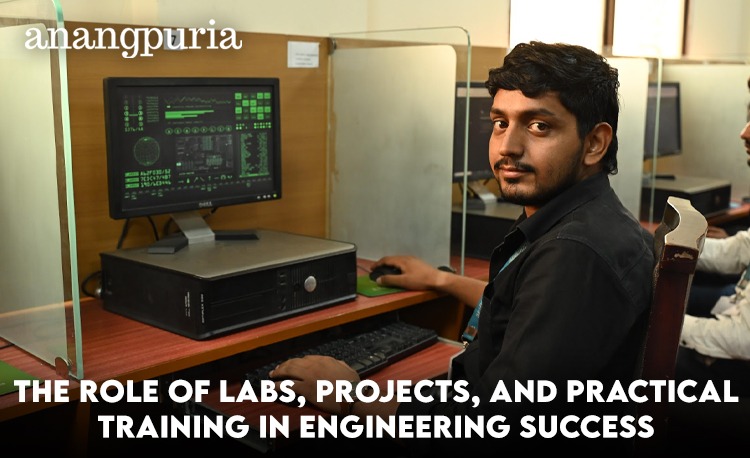
Engineering laboratories serve as the foundation of practical learning. They allow students to validate theoretical concepts through experimentation and observation.
Laboratory experiences help students:
- Understand engineering principles through hands-on application.
- Develop technical and analytical skills.
- Learn to use modern engineering tools and equipment.
- Improve accuracy, observation, and troubleshooting abilities.
- Gain confidence in conducting experiments independently.
Whether working in electronics, mechanical systems, computer programming, or civil engineering structures, laboratories provide valuable exposure that enhances classroom learning and strengthens technical competency.
Practical Learning Impact Chart
| Learning Component | Technical Skills | Problem Solving | Industry Readiness |
| Classroom Learning | Moderate | Moderate | Basic |
| Laboratory Sessions | High | High | Good |
| Academic Projects | Very High | Very High | Excellent |
| Industrial Training | Excellent | Excellent | Excellent |
| Research Activities | Very High | High | Excellent |
How Do Academic Projects Build Real-World Skills?
Projects encourage students to move beyond theoretical discussions and develop practical solutions to real-world problems.
Project-based learning enables students to:
- Apply classroom concepts to practical challenges.
- Develop innovation and creativity.
- Strengthen teamwork and collaboration skills.
- Improve project management capabilities.
- Learn documentation and presentation techniques.
Engineering projects often simulate workplace environments where students must analyze requirements, develop solutions, test outcomes, and present results. This experience significantly improves their confidence and professional readiness.
Why Does Practical Training Matter in Engineering Careers?
Industrial training provides students with direct exposure to professional engineering environments. It helps bridge the gap between academic learning and industry expectations.
Key benefits include:
- Understanding workplace processes and standards.
- Learning how engineering concepts are implemented in industries.
- Gaining exposure to emerging technologies.
- Developing communication and professional etiquette.
- Building industry networks and career connections.
Practical training also allows students to identify career interests and gain clarity regarding their future specialization choices.
How Do Industry Collaborations Improve Learning Outcomes?
Industry collaborations create opportunities for students to learn from experienced professionals and stay updated with evolving technological trends.
These collaborations may include:
- Expert guest lectures.
- Technical workshops and seminars.
- Industry-sponsored projects.
- Research partnerships.
- Corporate mentorship programs.
Such initiatives expose students to current industry challenges and provide valuable insights into emerging opportunities within engineering sectors.
Labs, Projects, and Training: A Comparative Overview
| Component | Primary Purpose | Key Benefit |
| Laboratories | Practical Understanding | Technical Skill Development |
| Academic Projects | Problem Solving | Innovation and Creativity |
| Industrial Training | Workplace Exposure | Career Readiness |
| Workshops | Skill Enhancement | Industry Awareness |
| Research Activities | Knowledge Creation | Advanced Technical Expertise |
Key Components of an Industry-Oriented Engineering Education
Students looking for a Top Engineering College in Haryana should evaluate the following practical learning opportunities:
Modern Laboratory Infrastructure
- Advanced equipment and technology.
- Well-maintained research facilities.
- Hands-on experimentation opportunities.
Industry-Relevant Projects
- Real-world problem-solving assignments.
- Interdisciplinary project work.
- Innovation and entrepreneurship initiatives.
Professional Training Programs
- Industrial visits.
- Internship opportunities.
- Technical certification courses.
Career Development Support
- Placement preparation workshops.
- Communication and leadership training.
- Industry mentoring sessions.
Research and Innovation Opportunities
- Faculty-guided research.
- Innovation labs and incubation centers.
- Participation in technical competitions.
These elements collectively contribute to producing skilled engineering graduates capable of succeeding in rapidly evolving industries.
Conclusion:
Engineering success is no longer determined solely by academic performance. In today’s competitive environment, laboratories, projects, and practical training play a crucial role in developing industry-ready professionals. Hands-on experiences help students apply theoretical knowledge, build technical expertise, and gain confidence in solving real-world challenges.
FAQs:
1. How does Anangpuria compare with other engineering colleges in providing practical laboratory exposure?
Anangpuria emphasizes hands-on learning through laboratories, helping students gain technical skills that complement theoretical education when compared with many traditional engineering institutions.
2. Why should students compare Anangpuria with other Top Engineering Colleges in Haryana before admission?
Students should evaluate factors such as laboratory facilities, project opportunities, industry exposure, faculty expertise, and placement support to make an informed decision.
3. Does Anangpuria offer better project-based learning opportunities compared to other engineering colleges?
Project-based learning opportunities help students develop innovation, teamwork, and problem-solving skills that are highly valued by employers across industries.
4. How important is industrial training at Anangpuria compared with other engineering institutions?
Industrial training provides practical workplace exposure and helps students understand industry expectations, making it a vital component of engineering education.
5. How do employers view graduates from Anangpuria compared with graduates from other engineering colleges?
Employers often prefer candidates who possess a strong balance of theoretical knowledge and practical experience gained through labs, projects, and industrial training.
6. What practical learning facilities should students compare between Anangpuria and other Top Engineering Colleges in Haryana?
Students should compare laboratory infrastructure, internship opportunities, research facilities, industry collaborations, project support, and placement preparation initiatives before selecting an institution.