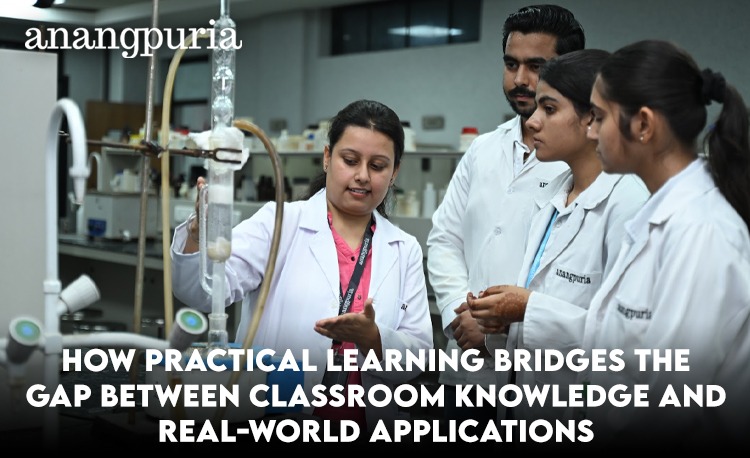
How Practical Learning Bridges the Gap Between Classroom Knowledge and Real-World Applications
Key Highlights
- Understand why practical learning is essential for modern engineering education.
- Explore how hands-on experiences improve technical skills and industry readiness.
- Learn how real-world projects enhance problem-solving and innovation abilities.
- Discover important factors students should consider while choosing among the Top Engineering Colleges.
- Know how experiential learning prepares students for successful professional careers.
Table of Contents
- Introduction
- About Us
- Why Is Practical Learning Important in Engineering Education?
- How Do Real-World Projects Help Students Apply Classroom Knowledge?
- Why Does Industry Exposure Matter for Engineering Students?
- How Does Skill Development Prepare Students for Future Careers?
- Conclusion
- FAQs
Introduction:
Engineering education has always been built on strong theoretical foundations, but today’s rapidly changing industries demand much more than textbook knowledge. At AnangPuria, the Top Engineering College in Haryana focuses on students on the ability to apply concepts, solve practical challenges, and develop innovative solutions that address real-world problems. This is where practical learning becomes a crucial part of modern technical education, helping learners connect academic concepts with professional applications.
About Us:
AnangPuria focuses on creating an educational environment where students can develop technical knowledge along with practical skills required for professional success. The institution encourages learning beyond traditional classrooms through interactive teaching methods, project-based activities, and exposure to real-world engineering applications.
Why Is Practical Learning Important in Engineering Education?
Traditional classroom teaching provides students with essential theoretical concepts, but practical learning helps them understand how these concepts work in real situations. Engineering is a field where application-based knowledge plays a major role in creating effective solutions.
Practical learning helps students:
|
Learning Method |
Student Benefit |
|
Laboratory Experiments |
Improves technical understanding |
|
Industry Projects |
Provides real-world exposure |
|
Workshops |
Develops practical expertise |
|
Internships |
Builds workplace readiness |
|
Innovation Activities |
Encourages creative thinking |
The advantages of practical education include:
- Better understanding of engineering principles through direct application.
- Improved ability to analyse and solve technical problems.
- Development of teamwork and communication skills.
- Increased confidence while handling professional responsibilities.
Engineering students who regularly engage in practical activities are better prepared to face challenges beyond academics.
How Do Real-World Projects Help Students Apply Classroom Knowledge?
Real-world projects allow students to move beyond theoretical concepts and experience the process of designing, developing, and implementing solutions. These projects encourage learners to think critically and understand how engineering ideas create practical impact.
Through project-based learning, students can:
- Apply classroom theories to solve actual problems.
- Understand the complete process of engineering development.
- Improve research and analytical abilities.
- Learn project management and collaboration skills.
For example, designing prototypes, developing software solutions, conducting experiments, or working on engineering models helps students understand industry expectations. These experiences create a deeper connection between academic learning and professional applications.
Why Does Industry Exposure Matter for Engineering Students?
Industries constantly evolve with advancements in technology, automation, and innovation. Therefore, engineering students need exposure to current industry practices to understand professional requirements.
Industry exposure helps learners:
- Gain insights from experienced professionals.
- Understand workplace processes and expectations.
- Learn about emerging technologies and trends.
- Develop professional networks.
Activities such as internships, expert sessions, technical workshops, and industry collaborations provide students with valuable experiences. These opportunities help learners understand how engineering knowledge is used to create solutions in different sectors.
A strong engineering institution focuses on developing professionals who can confidently transition from academic environments to corporate workplaces.
How Does Skill Development Prepare Students for Future Careers?
Technical knowledge alone is not enough for engineering graduates to succeed in competitive industries. Employers increasingly look for candidates who possess a combination of technical expertise and professional skills.
Important skills developed through practical learning include:
- Problem-Solving Skills: Helps students analyse challenges and create effective solutions.
- Technical Skills: Improves understanding of tools, technologies, and engineering processes.
- Communication Skills: Enables better teamwork and professional interaction.
- Leadership Skills: Builds confidence to manage projects and responsibilities.
- Adaptability: Helps students adjust to changing industry requirements.
Practical learning environments encourage students to experiment, learn from mistakes, and continuously improve their abilities. This creates future-ready engineers who can contribute effectively to organisations.
Conclusion:
Practical learning plays a significant role in transforming engineering education by connecting classroom concepts with real-world applications. It enables students to understand technical principles better while developing creativity, confidence, and professional skills.
When choosing an engineering program, students should consider institutions that provide opportunities for hands-on learning, industry interaction, and skill development. A balanced approach combining theoretical knowledge with practical experiences prepares learners to become capable professionals who can successfully contribute to the future of technology and innovation.
FAQs:
Q1. Why is hands-on learning important for engineering students?
Ans: AnangPuria emphasises practical experiences that help learners apply theoretical concepts to real engineering situations.
Q2. How do projects improve technical understanding?
Ans: Project-based learning allows students to develop innovation, teamwork, and problem-solving skills.
Q3. What makes practical exposure valuable for future engineers?
Ans: Real-world experiences help students understand industry expectations and build professional confidence.
Q4. How does engineering education benefit from industry interaction?
Ans: AnangPuria encourages exposure to professional practices, helping students connect academic knowledge with workplace requirements.
Q5. Which skills can students develop through experiential learning?
Ans: Learners improve technical expertise, communication abilities, analytical thinking, and adaptability.
Q6. Why is application-based education important today?
Ans: AnangPuria prepares students to handle modern engineering challenges through practical and skill-focused learning.