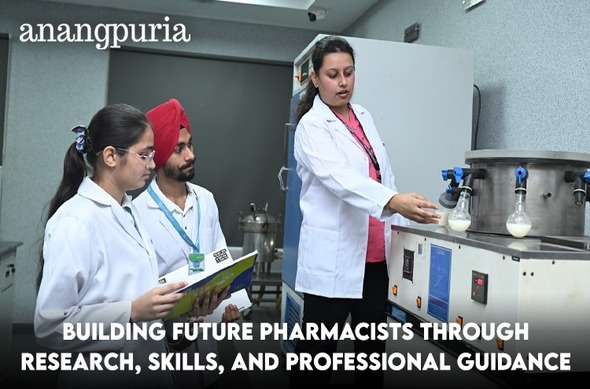
Building Future Pharmacists Through Research, Skills, and Professional Guidance
Key Highlights
- Understand the growing importance of research-driven pharmaceutical education.
- Learn how practical skills shape successful pharmacy careers.
- Discover the role of professional guidance in preparing future pharmacists.
- Explore how industry exposure enhances employability and innovation.
- Find out what students should look for when choosing a B Pharma College.
- Learn how a balanced approach to academics, research, and training creates industry-ready pharmacy professionals.
Table of Contents
- Introduction
- About Us
- Why Is Research Important in Pharmacy Education?
- How Do Practical Skills Shape Future Pharmacists?
- Why Does Professional Guidance Matter for Pharmacy Students?
- How Does Industry Exposure Improve Career Opportunities?
- Research, Skills, and Guidance: A Comparative Overview
- Essential Elements of a Future-Focused Pharmacy Program
- Conclusion
- FAQs
Introduction:
The pharmaceutical industry plays a crucial role in improving healthcare outcomes and enhancing the quality of life worldwide. At Anangpuria, the Top 10 B Pharma Colleges in Faridabad where medical science continues to advance, the demand for highly skilled pharmacists has increased significantly. Today’s pharmacy professionals are expected to possess not only strong academic knowledge but also practical expertise, research capabilities, and professional competencies that enable them to contribute effectively to patient care, drug development, and healthcare innovation.
About Us:
A progressive pharmacy institution is committed to nurturing future healthcare professionals through a comprehensive educational approach that combines academic excellence with practical learning. By emphasizing research activities, laboratory training, industry interaction, and professional development, students gain the confidence and expertise needed to excel in diverse pharmaceutical careers.
The focus is on developing critical thinkers, ethical practitioners, and innovative professionals who can contribute meaningfully to the healthcare and pharmaceutical sectors while adapting to emerging industry trends and technological advancements.
Why Is Research Important in Pharmacy Education?
Research is a cornerstone of pharmaceutical innovation. It helps students develop scientific thinking, analytical skills, and a deeper understanding of drug development processes.
Research-oriented learning enables students to:
- Explore new pharmaceutical formulations and technologies.
- Understand drug discovery and development processes.
- Develop critical analysis and problem-solving abilities.
- Gain exposure to scientific methodologies and experimentation.
- Contribute to healthcare advancements through innovation.
Students who participate in research projects often gain valuable experience that prepares them for higher studies, clinical research, and pharmaceutical industry roles.
Pharmacy Education Impact Chart
| Learning Component | Knowledge Development | Practical Skills | Career Readiness |
| Classroom Learning | High | Moderate | Moderate |
| Research Activities | Very High | High | High |
| Laboratory Training | High | Very High | Excellent |
| Industrial Exposure | High | Excellent | Excellent |
| Professional Mentorship | Moderate | High | Very High |
How Do Practical Skills Shape Future Pharmacists?
Pharmacy is a profession that requires precision, technical competence, and attention to detail. Practical skills enable students to apply theoretical concepts effectively in real-world healthcare settings.
Key benefits of practical training include:
- Understanding pharmaceutical formulations and manufacturing processes.
- Learning laboratory techniques and quality control procedures.
- Developing medication management and dispensing skills.
- Enhancing communication and patient interaction abilities.
- Building confidence in handling pharmaceutical equipment and technologies.
Hands-on experiences ensure that graduates are prepared to meet professional responsibilities and industry expectations from the beginning of their careers.
Why Does Professional Guidance Matter for Pharmacy Students?
Professional guidance helps students navigate academic challenges, career opportunities, and industry requirements effectively.
Through structured mentorship and career counseling, students can:
- Identify suitable career pathways.
- Understand emerging opportunities in pharmaceutical sectors.
- Develop leadership and communication skills.
- Receive guidance for competitive examinations and higher studies.
- Build confidence and professional competence.
Mentorship programs also help students stay informed about evolving industry trends, regulatory requirements, and advancements in healthcare technology.
How Does Industry Exposure Improve Career Opportunities?
Industry exposure provides students with firsthand insights into pharmaceutical operations and workplace expectations. It bridges the gap between academic learning and professional practice.
Benefits of industry interaction include:
- Understanding pharmaceutical manufacturing processes.
- Learning regulatory compliance and quality standards.
- Gaining exposure to clinical research and drug development.
- Networking with industry professionals.
- Improving employability through real-world experience.
Workshops, internships, industrial visits, and expert sessions help students develop a broader perspective on career opportunities within the pharmaceutical sector.
Research, Skills, and Guidance: A Comparative Overview
| Component | Primary Objective | Long-Term Benefit |
| Research Activities | Scientific Exploration | Innovation & Higher Studies |
| Laboratory Training | Practical Learning | Technical Expertise |
| Professional Guidance | Career Development | Better Decision-Making |
| Industry Exposure | Workplace Understanding | Enhanced Employability |
| Skill Development Programs | Competency Building | Professional Success |
Essential Elements of a Future-Focused Pharmacy Program
Students evaluating a B Pharma College should consider the following features:
Advanced Laboratory Facilities
- Modern pharmaceutical laboratories.
- Research-oriented infrastructure.
- Access to advanced analytical instruments.
Research Opportunities
- Faculty-guided research projects.
- Scientific publications and presentations.
- Innovation and development initiatives.
Industry Integration
- Industrial visits and internships.
- Corporate collaborations.
- Expert-led workshops and seminars.
Professional Development Support
- Career counseling sessions.
- Soft skills and communication training.
- Placement preparation programs.
Healthcare and Ethical Training
- Patient-centered learning approaches.
- Regulatory and ethical education.
- Professional responsibility development.
These components create a strong educational ecosystem that supports both academic achievement and professional growth.
Conclusion:
Building successful pharmacists requires more than academic instruction alone. Research experiences, practical skill development, and professional guidance collectively play a vital role in preparing students for the evolving healthcare landscape. These elements help students develop technical expertise, critical thinking abilities, and professional confidence necessary for thriving careers in pharmacy.
FAQs:
1. How does Anangpuria compare with other pharmacy colleges in developing research skills?
Anangpuria emphasizes research-oriented learning, helping students gain scientific knowledge and analytical abilities that are highly valuable in pharmaceutical careers.
2. Why should students compare Anangpuria with other Top 10 B Pharma Colleges in Faridabad before admission?
Students should evaluate research facilities, laboratory infrastructure, industry exposure, faculty expertise, and career development support before making their decision.
3. Does Anangpuria provide better practical learning opportunities than other pharmacy colleges?
Practical laboratory training and hands-on experiences help students develop technical competence and workplace readiness essential for professional success.
4. How important is professional guidance at Anangpuria compared with other pharmacy institutions?
Professional guidance helps students understand career pathways, industry expectations, and higher education opportunities while building confidence and leadership skills.
5. How do employers view graduates from Anangpuria compared with graduates from other pharmacy colleges?
Employers often value graduates who possess a combination of strong academic foundations, practical skills, research experience, and professional competence.
6. What factors should students compare between Anangpuria and other Top 10 B Pharma Colleges in Faridabad?
Students should compare laboratory facilities, research opportunities, industry collaborations, internship programs, faculty support, placement assistance, and overall professional development initiatives.